IVA's President: Some thoughts on Capitalism, sustainability, and democracy
Dear IVA Friends,
One week ago, we woke up to a new war in the Middle East. The US and Israel carried out an attack on Iran that has been criticized for its lack of support under international law. At the same time, a tyrant is gone and Iran’s nuclear threat has been significantly weakened. Regardless of your views on these events, they are yet another reminder that we are facing a completely new geopolitical situation. The world is not what it used to be. The rules-based order is over.
There is a growing awareness of the declining importance and influence of European countries in the new world order and of the need for the EU (and Europe) to act in unison. At the same time, it often appears more politically rewarding for national governments domestically to complain about Brussels or argue for national exceptions than to work towards a more united, effective – and therefore stronger – Europe (economically, militarily, and in foreign policy).

The European Union is struggling to compete with the US and China when it comes to technological and economic strength. And the lack of a common political line on crucial issues is painful. I have previously argued in favor of “Coalitions of the Willing” or “Speedboats” – temporary groupings of European countries that take the lead. The crisis of the past week shows this is necessary. But is this the death knell for the European project, or could it be its salvation?
In a few weeks, the European Commission will present a new book that I co-edited: Capitalism, Sustainability and Democracy. Some of you will note the nod to Schumpeter's seminal work, Capitalism, Socialism and Democracy, which first introduced the concept of creative destruction to a wider audience.
As the new book's subtitle, Future-proofing the European model, suggests, we propose a series of reforms aimed at strengthening the EU's geopolitical and economic position.
The European Union model differs from both the US and Chinese models in several respects. The EU is a supranational market economy with far-reaching social welfare ambitions, but it lacks a functioning internal market (e.g., for services and capital). The Union is struggling with declining competitiveness, fading technological strength, weakened economic power, and reduced global influence. This affects our self-image.
At the same time, we argue that Europe is the only region and the only international community with the potential to bring together three crucial powers in a mutually reinforcing relationship: capitalism (or market forces), sustainability (green and social), and democracy.
In order for Europe to realize its potential, we propose a modernization of the Lisbon Treaty with the aim of speeding up decision-making and processes. A more agile EU is crucial to decisive action in the future.
We also propose reforms in several areas aimed at strengthening the Union's competitiveness: a large-scale AI transition, a renewed innovation system that integrates civil and military R&D investments, a new, regionally focused industrialization, and an effective investment plan for green technology that aims to take advantage of the US's reduced focus on sustainability.
Above all, we point to a better functioning internal market as crucial to Europe's (and especially small economies') future competitiveness, security, and prosperity.
The upshot is that the EU requires profound systemic change. I believe EU citizens expect this. Popular support is already there. Perhaps we citizens have grasped this crisis before our own political leaders?
As Jean Monnet, one of the founders of the European Union, said, “people only accept change when they are faced with necessity and only recognize necessity when a crisis is upon them.”
Thank you for being part of IVA's network!
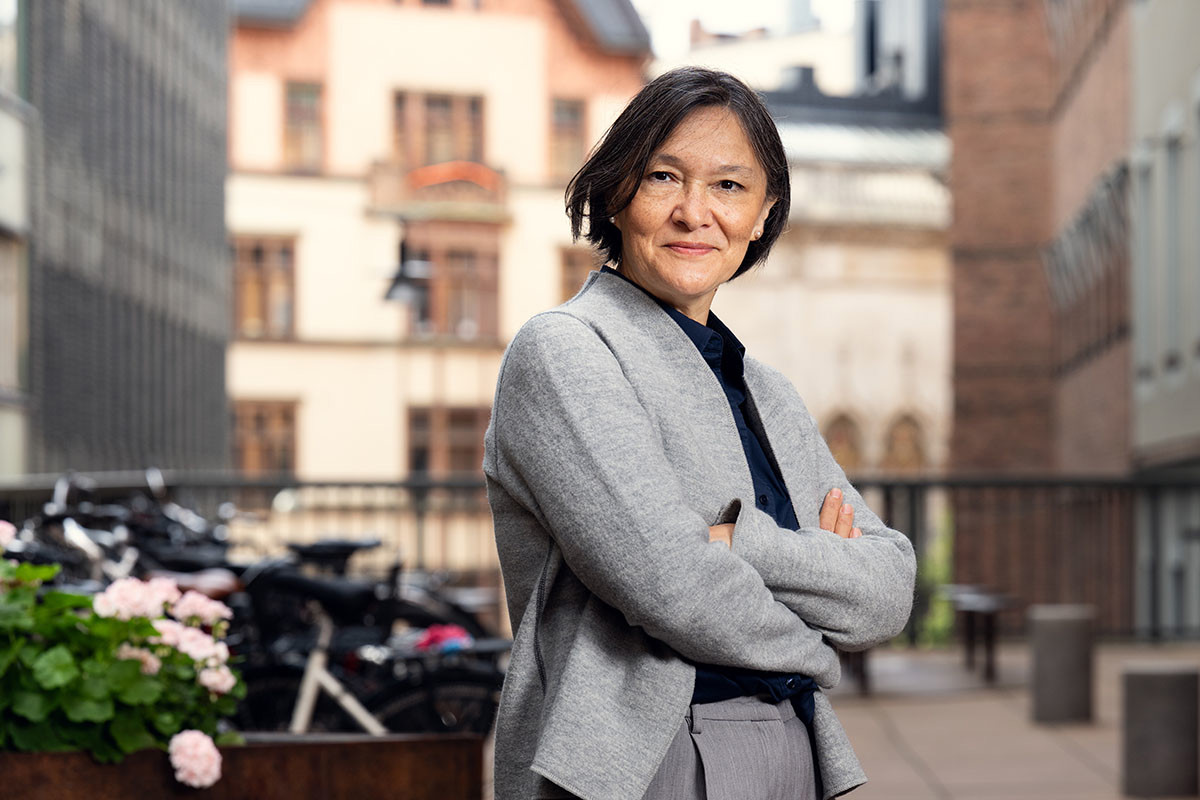
/Professor Sylvia Schwaag Serger, President IVA
Some thoughts from IVA´s President are published in Swedish in IVA's newsletter, and in English on IVA's LinkedIn.