IVA's President: Some thoughts on Lifelong Learning
Dear IVA Friends,
“Throw out the box and encourage brain circulation!”
That is how I would summarize one of Nobel Laureate Joel Mokyr’s key messages from our conversation at IVA last Sunday.
When discussing how small countries can succeed in global competition, Joel Mokyr argued that it is not enough to “think outside the box” – we need to throw the box away altogether. Small countries should actively encourage the circulation of ideas by promoting international study, work and exchange.
Joel Mokyr also emphasized that progressive societies view technological and scientific development as something positive and desirable – a force that drives innovation, experimentation and the accumulation of knowledge. Such cultures, where learning and curiosity are highly valued, tend to generate long-term economic growth and prosperity.
When asked what characterizes our current era, Joel Mokyr responded that the rapid and disruptive technological development we see today is fundamentally different from anything humanity has experienced before:
“On every dimension you can think of; life today, on this planet, is so radically different from what it has been in the past.”
As an economic historian, I agree. It is always difficult to analyze one’s own time and put it into perspective. But those of you who regularly read my texts will recognize the message: ultra-fast technological development is overturning much of what we long believed to be true. The era we are living in is unique and cannot be compared to anything that came before. This places extremely high demands on decision-makers here and now – not only politicians, but also university leaders, business executives and heads of government agencies.
You can watch the full conversation here. In addition to my questions about the role of technology in sustained growth and China’s role in today’s world, several guests posed questions to Joel Mokyr. Elisabeth Backteman, Director General of the Swedish Agency for Economic and Regional Growth, asked what small countries like Sweden should do to strengthen an innovation-friendly culture. Johan Lindholm, President of the Swedish Trade Union Confederation, asked about the role of social safety nets in a society that seeks to encourage innovation and growth.
These are particularly important questions for Sweden. Our country stands out in several ways, both globally and within the EU. Sweden is the most innovative country in the EU; we have more unicorns per capita than any country except the United States, high labor force participation and very low public debt. At the same time, we face fluctuating productivity, major challenges in our school system, gang-related crime and rising unemployment. With the election campaign approaching, my hope is that our political parties will take a long-term perspective and assume responsibility for Sweden’s development beyond the next electoral term.
In the previous newsletter, I asked whether Sweden might benefit from having a Minister for Technology. Judging by my inbox, many of you seem to agree. I do not know whether a technology minister is the decisive solution, but I would like to see a much deeper understanding of the crucial role technology plays in creating growth and building a sustainable and secure society.
Someone said: “I am more afraid of old technology than of new technology.” I agree. But we must also recognize that when new technologies are introduced, societies are shaken. Some professions disappear, while others emerge. Joel Mokyr reminded us that an entire profession – scribes who manually copied texts – was rapidly decimated when the printing press spread across Europe in the 15th century.
Today, we talk about “AI-exposed occupations”, such as software developers and IT specialists. Stanford economist Erik Brynjolfsson addressed this when he visited IVA in August. In his study Canaries in the Coal Mine, he shows that AI tends to hit younger and newly hired workers hardest. In the United States, employment among younger workers in AI-exposed occupations has already declined by close to 20 percent.
Against this backdrop, lifelong learning becomes critically important. The need for continuous upskilling and reskilling of professionals – not least engineers – is growing rapidly, driven by technological transformation as well as major societal challenges such as climate change and a deteriorating security environment.
Today, neither the mission nor the structure of higher education institutions is designed to meet these needs. There is a lack of flexibility, clear processes and sufficient capacity, making it difficult for professionals to find and participate in relevant courses. There are also weak incentives for universities to address this demand – an issue I struggled with myself during my time as Vice-Chancellor at Lund University.
Recently, KTH Royal Institute of Technology published a report by Professor Gunnar Karlsson highlighting the importance of lifelong learning. The report proposes several interesting reforms to break the current deadlock. Among other things, it suggests that the entire course offering should be made available to professionals immediately. IVA welcomes this proposal and hopes to see fully occupied digital classrooms in the coming semesters.
As we now approach an extended holiday break, I wish you all a pleasant end to the year.

Thank you for being part of IVA's network!
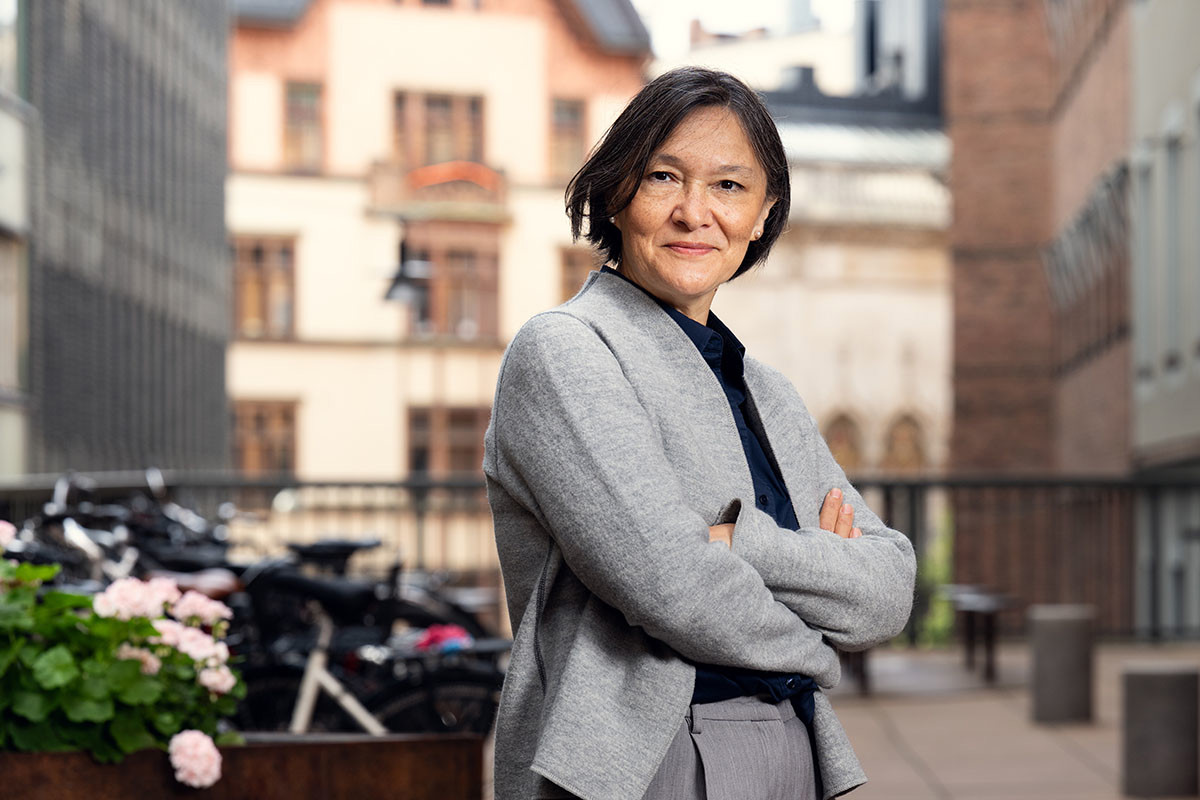
/Professor Sylvia Schwaag Serger, President IVA
Some thoughts from IVA´s President are published in Swedish in IVA's newsletter, and in English on IVA's LinkedIn.