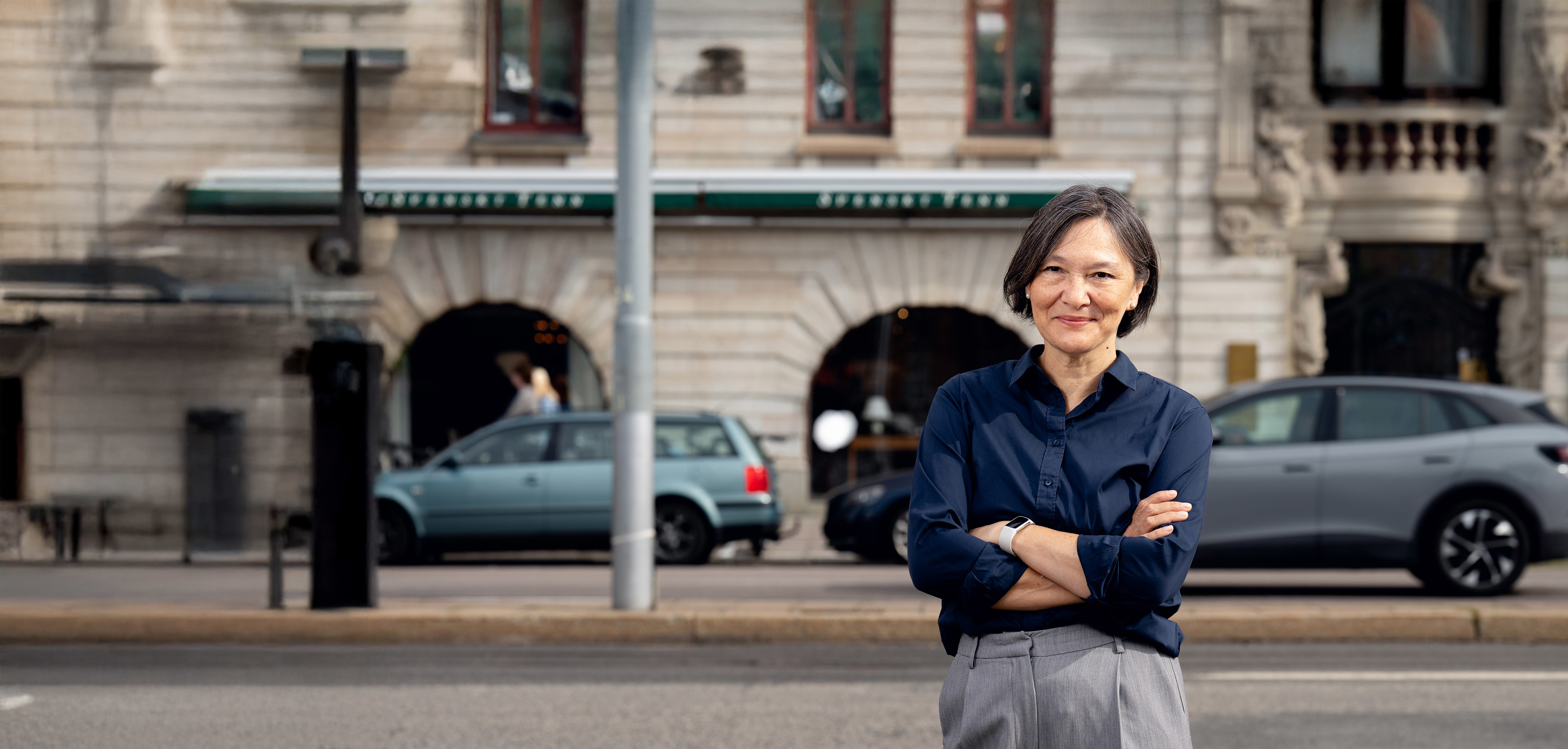
IVA's President: Some thoughts on Sweden's position in AI
Dear IVA Friends,
It is encouraging that Sweden has reversed its trend in the Observer Global AI Index, which measures investment, innovation and use of AI, climbing to 19th place from 25th. According to a similar report, Stanford University's Global AI Index, Sweden now ranks fourth in private venture capital investment in AI development.
The Swedish business community invested SEK 40 billion in AI development in 2024. Over the last year, we have also shown that we can be among the world leaders in building the AI companies of the future. One example is the AI software firm Lovable, currently one of the world's fastest-growing startups.
At the same time, it is clear that Sweden must be more aggressive in many of its AI efforts. In government priorities, for instance, Sweden still lags far behind many other countries. This goes for investment, modernized legislation, improved digital infrastructure, strengthened education, and greater use of AI in the public sector.
In 2026, the government will present a new AI strategy and has announced investments of SEK 479 million for AI and data. I hope this will help drive a serious upturn in Swedish AI investments in 2026.
East Asia is at the center of a global robotics revolution. China, Japan, and South Korea are leading the way with impressive figures: Japan supplied 45 percent of the world's industrial robots in 2022, China now has more than half of all global installations and reported a production increase of almost 30 percent in 2025. South Korea leads in robot density with one robot per ten workers – six times the global average. These figures signal a new industrial era, as shown in the latest Global Outlook: Asia, produced by researchers Hyejin Kim and Erik Mobrand on behalf of IVA.
The next generation of robots will be more versatile. Today's industrial robots are often built for a single task and are expensive and hard to reconfigure when production changes. With more advanced AI, robots will adapt more quickly and replace more types of jobs. The rapid pace of automation and the use of humanoid robots raise questions that cannot be ignored. But the new technology is not the threat – it is how society chooses to handle it.
Who will take responsibility for ensuring that Sweden does not fall behind? I have previously asked if we could benefit from a technology minister with a mandate to coordinate education, the labor market, and industrial policy. We should not fear new technology – we should embrace the opportunities it offers. But this requires decisive action from all spheres of society. History shows that Sweden can combine growth with fair distribution. We are good at change, we are curious, and we have an innovation-friendly culture. Now, with technology developing at an ultra-fast pace, we have great opportunities, but also a responsibility to step up in the global competition.
Finally, I am pleased to share that today we are publishing the first contribution to a collection of essays written for IVA within the framework of Swedish Futures — a vision for Sweden as a country of technology and innovation by 2035. We look forward to publishing one essay per month throughout 2026 to shed light on pressing future issues and to contribute to constructive dialogue. The first essay is authored by Professor Mats Benner and myself and explores a shared vision of the future — I hope it may inspire further reflections.

Thank you for being part of IVA's network!
/Professor Sylvia Schwaag Serger, President IVA
Some thoughts from IVA´s President are published in Swedish in IVA's newsletter, and in English on IVA's LinkedIn.