Report: Advanced Manufacturing
Every lorry that rolls out of Gothenburg. Every fighter aircraft that takes off from Linköping. Every industrial robot assembled in Västerås. Advanced manufacturing is today one of Sweden’s most important assets – a world-class sector that employs hundreds of thousands of people and accounts for a significant share of Sweden’s export revenues. But international competition is intensifying. A new report from Royal Swedish Academy of Engineering Sciences shows what Sweden needs to do to maintain its lead in an increasingly competitive world.
A large part of Sweden’s prosperity rests on what is known as complex discrete manufacturing. This refers to the production of advanced products such as lorries, industrial robots, aircraft and combat vehicles, which consist of thousands of individual components, require long supply chains and place high demands on collaboration between many different actors.
At a time of rapid technological development, increasing sustainability demands and tougher competition, advanced manufacturing is a crucial key to safeguarding Sweden’s position in the world. But other countries are catching up and overtaking us. If Sweden is to keep pace with international developments, action is needed – and a clear plan is required.

This is about Sweden’s ability, together with Europe, to stand on its own two feet. It concerns not only our competitiveness and prosperity, but also our security: the ability to produce what we need in order to build a stable and resilient society.
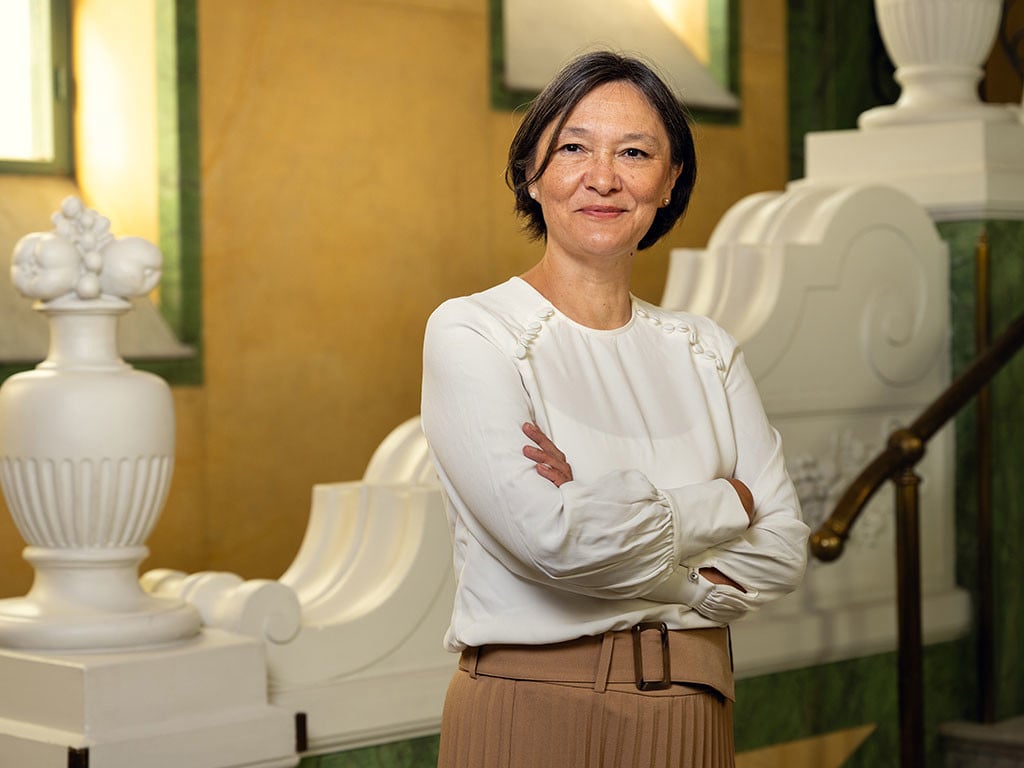
“To compete with countries such as China, the United States and South Korea, we must become more efficient, more circular, improve our ability to adapt and invest more in developing new skills. And the state must be prepared to take greater responsibility,” says Professor Sylvia Schwaag Serger, President of the Royal Swedish Academy of Engineering Sciences.
Vision for Swedish Advanced Manufacturing 2035
The report sets out a clear vision: by 2035, Swedish industry within discrete manufacturing should be flexible and resilient, with the ability to rapidly adapt and scale up production when global developments demand it. Supply chains should be diversified, circularity should be a natural part of business logic, and skills provision should be a strength rather than a bottleneck.
It is an ambitious vision, but a necessary one, as the alternative could be an industry that gradually loses competitiveness, expertise and ultimately its place in the global value chains shaping future prosperity.
About the Report
The report has been produced within Royal Swedish Academy of Engineering Sciences’s project Swedish Futures, with representatives from Volvo Group, Scania, Saab, ABB Robotics, Luleå University of Technology and other leading stakeholders. The work was carried out between December 2025 and April 2026 and forms part of a broader initiative to formulate a long-term vision for Sweden as a global leader in technology and innovation by 2035.

Recommendations
The recommendations are based on an analysis of Sweden’s current position within manufacturing, international development trends, and a review of key issues identifying obstacles and opportunities for Sweden’s continued development. They summarise the proposals and action points presented in greater detail above.
- Ensure that Sweden becomes better at translating research into industrial application. To achieve this, stronger expertise and test environments for industrialisation are needed, alongside investment in research within established production technologies.
- Strengthen Swedish resilience through the transition to a circular economy. This requires changes to business models, regulation and incentives within the manufacturing industry.
- Increase Sweden’s innovation capacity by establishing a number of industrial clusters and improving the fundamental conditions for establishing and operating manufacturing industries across the country.
The report also presents several concrete proposals for action, outlining which measures are needed, when they should be implemented and which stakeholders should be responsible for carrying them out, including:
- Strengthen expertise, innovation and test environments for industrialisation. For example, by doubling state support for engineering education and requiring deeper collaboration with industry.
- Strengthen Swedish resilience through the transition to a circular economy. For example, by introducing a “Circularity Leap” for industry – a new support programme to help Swedish companies transition to circular production.
- Develop Swedish industrial clusters by further strengthening and expanding regions that are already established and have well-functioning collaboration between different actors. Allow Swedish Agency for Economic and Regional Growth or Vinnova to lead the development of a financing strategy for industrial clusters, in cooperation with relevant government agencies, regions, municipalities and industry organisations.
- Invest in research within established production technologies. For example, by assigning selected technical universities a clear national responsibility for securing a technical skills base and strengthening research within several strategically important technological fields for the future.
- Improve the manufacturing industry’s fundamental conditions for establishment and operation. For example, by tasking the government and responsible authorities with improving permitting processes, shortening processing times and making procedures more predictable.