A Shared Vision of the Future
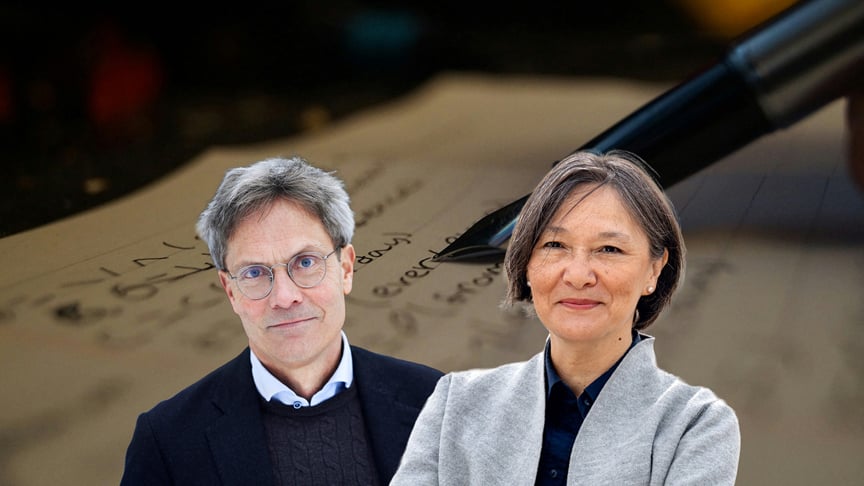
How can conflicting forces and interests be reconciled - and how can we chart a course toward a rational and secure society? Essay written for IVA as part of Swedish Futures - a vision for Sweden as a country of technology and innovation by 2035 by Professor Mats Benner, Lund University and Professor Sylvia Schwaag Serger, President of IVA.

In an era characterised by profound shifts, Sweden faces a series of crucial choices. This calls for many forces within society to join hands in order to secure continued progress towards prosperity and democracy.
This essay is the first in a collection aimed at identifying the key trends and long-term trajectories.
We live in an era where powerful forces threaten to pull societies and the international community apart. Across the globe, politics and economics are marked by volatility and uncertainty. Rapid technological progress is reshaping markets and working life in profound ways. Acute conflicts in our surrounding world compel us to rethink security—both as a sovereign nation and within shifting alliances. Democracy and social cohesion are strained by polarization and populism. To safeguard future prosperity, we must hold firm to the principle of sustainable development. The list of fault lines is not only long; taken together, it is immensely complex.
Faced with these challenges, resignation comes easily. Equally seductive is the lure of simplistic solutions—a trend we see unfolding worldwide. Yet authoritarian impulses and “quick fixes” invariably lead to ruin, whether through stagnation or outright conflict.
Not long ago, we lived in an era of rising prosperity and growing global interdependence - a long upward trajectory sustained by confidence in growth, technology, and the future. This development reconciled diverse social and political interests. Many of us assumed this order would endure.
During that period of global growth and democratic expansion, cracks in what was called the rules-based international order were visible, yet stability prevailed at its core. That is no longer the case. Geopolitical rivalries and economic frictions have eroded the foundations of the model that shaped the past three decades. The consequences are evident in mounting instability and threats to both internal and external security.
To break free from this impasse, we must once again dare to ask how conflicting forces and interests can be reconciled - and how we can chart a course toward a rational and secure society.
Our vision of a good society rests on the art of combination: bringing together fundamental elements and societal interests. These elements are autonomy, democracy, sustainability, technology, equality, and prosperity.
Autonomy (Agency) – The capacity for self-determination: to articulate our own goals and ambitions as a nation, ensuring security, resilience, and sovereignty.
Democracy – Self-evident, yet worth repeating: a good society thrives on popular rule, open debate, and freedom of opinion.
Sustainability – Development that “meets the needs of the present without compromising the ability of future generations to meet their own needs,” as Gro Harlem Brundtland so aptly expressed.
Technology – Advanced knowledge and innovative capacity: indispensable for value creation, autonomy, and influence.
Equality – A framework where diverse forces coexist, are needed, respected, and mutually reinforcing.
Prosperity – The generation of wealth that can be distributed and reinvested to refine and deepen ambitions - today and for the future.
The absence of any one of these elements distorts the societal fabric.
A robust and dynamic society is shaped not only by consensus but by pluralism. It emerges from the interplay of multiple interests—business, labor, civil society, academia, and politics. Each constitutes a vital pillar. When these forces converge around a shared vision of transformation, remarkable progress becomes possible. When they obstruct one another with irreconcilable visions, society stagnates and inexorably drifts toward fragmentation.

The Sweden that seeks to leap into the future must be anchored in a common idea—an affirmative synthesis of foundational elements and societal interests. Only then can we navigate a world in transition with confidence.
Within the framework of IVA’s initiative Swedish Futures (Svenska framtider), we are conducting a comprehensive review of how Sweden can continue to thrive in a changing global landscape and maintain its position as a leading nation in technology and innovation.
We identify several pivotal questions for the future, grounded in combinations of these elements:
Technology / Sustainability / Autonomy (Agency): How do we build a genuinely sustainable and resilient society? How do we ensure that high expectations serve as a catalyst for renewal rather than a brake on progress?
Equality / Prosperity / Technology: How do we create space for learning, innovation, and risk-taking while preserving social cohesion through taxation, redistribution, and inclusion? How do we invest wisely in the future?
Sustainability / Democracy / Prosperity: How do we reconcile local interests with intergenerational responsibility and stewardship of nature—across regions and globally? What does authentic climate democracy entail?
Autonomy (Agency) / Equality / Democracy: How do we secure resilience and safety while safeguarding freedom and democratic values? How do we harness the full breadth of societal competence to foster a secure sense of belonging in active engagement with the world beyond our borders?
Sweden has reinvented itself before: during industrialization, when Europe’s poorest country became home to pioneering industries and major exporters; in the 1930s, when grand social compromises preserved democracy, labor peace, and consensus; in the prosperous 1950s, when Sweden became Europe’s wealthiest nation and prosperity was broadly shared; and in the 1990s, when financial stability and economic dynamism were restored. Each transformation was marked by the convergence of diverse interests in pragmatic agreements, guided by a clear vision of sustainable progress.
Our premise is that technological and innovative development forms the bedrock—but it must be embedded within a broader context of goals and interests. Sweden must choose a path, yet it need not choose between prosperity and equality, autonomy and democracy, or technology and sustainability. Rather, we must forge creative combinations of these elements as a common platform for action.
Only by linking these varied interests can Sweden’s visions of the future become both clear and enduring.
Professor Mats Benner, Lund University
Professor Sylvia Schwaag Serger, CEO IVA
About Mats Benner
Mats Benner is Professor of Research Policy at Lund University and a leading expert on the development of research and higher education systems. He earned his PhD in Sociology in 1997 and has held several prominent academic positions, including Director of the Research Policy Institute and Dean of the School of Economics and Management at Lund University.
Benner is regularly consulted in national and international contexts on research policy and the strategic development of universities. He has an extensive body of scholarly work on research policy, university governance, and the relationship between academia, the state, and industry.
He has been a fellow of IVA’s Education and Research Policy Division since 2009.

About Sylvia Schwaag Serger
Sylvia Schwaag Serger is a Professor at Lund University, President of the Royal Swedish Academy of Engineering Sciences (IVA) since October 2024, and a fellow of IVA’s Education and Research Policy Division since 2019.
She has spent over 20 years shaping, implementing, and studying innovation policy in Europe and China, and currently serves as Chair of the Scientific Council of the Swedish Research Council for Sustainable Development Formas, Vice Chair of the Austrian Council for Research, Science and Innovation, a board member of the Raoul Wallenberg Institute of Human Rights, and a member of the expert group for the mid-term evaluation of Horizon Europe, the EU’s framework programme for research and innovation.